
What is alopecia areata?
Alopecia areata is a condition in which the immune system is thought to target hair follicles, causing hair to fall out in patches. It is generally considered an autoimmune condition. The follicles are usually not destroyed, which is why hair can regrow in many cases, though the course is hard to predict.
It can affect people of any age or gender. Some people have a single patch that regrows, while others have several patches, repeated episodes or more widespread loss. It is not contagious, and it is not caused by anything you did.
What does alopecia areata look like?
The classic sign is one or more smooth, round or oval bald patches, often on the scalp, appearing over days or weeks. Other features people sometimes notice include:
- Short, broken hairs at the edge of a patch.
- Patches in the beard or eyebrows.
- Tingling or mild itching before hair falls.
- Changes to the nails, such as small pits.
Several other conditions can cause patchy loss, including fungal infection, traction from tight styles, hair pulling, and some scarring scalp conditions. They need very different care, so patchy loss should always be checked by a doctor.
Some people notice that regrowing hair in a patch comes back white or lighter at first, and then gradually returns to its usual colour over time. This can be part of the normal course of alopecia areata, but mention it to your doctor so they can see the full picture.
Why does patchy hair loss need a medical diagnosis?
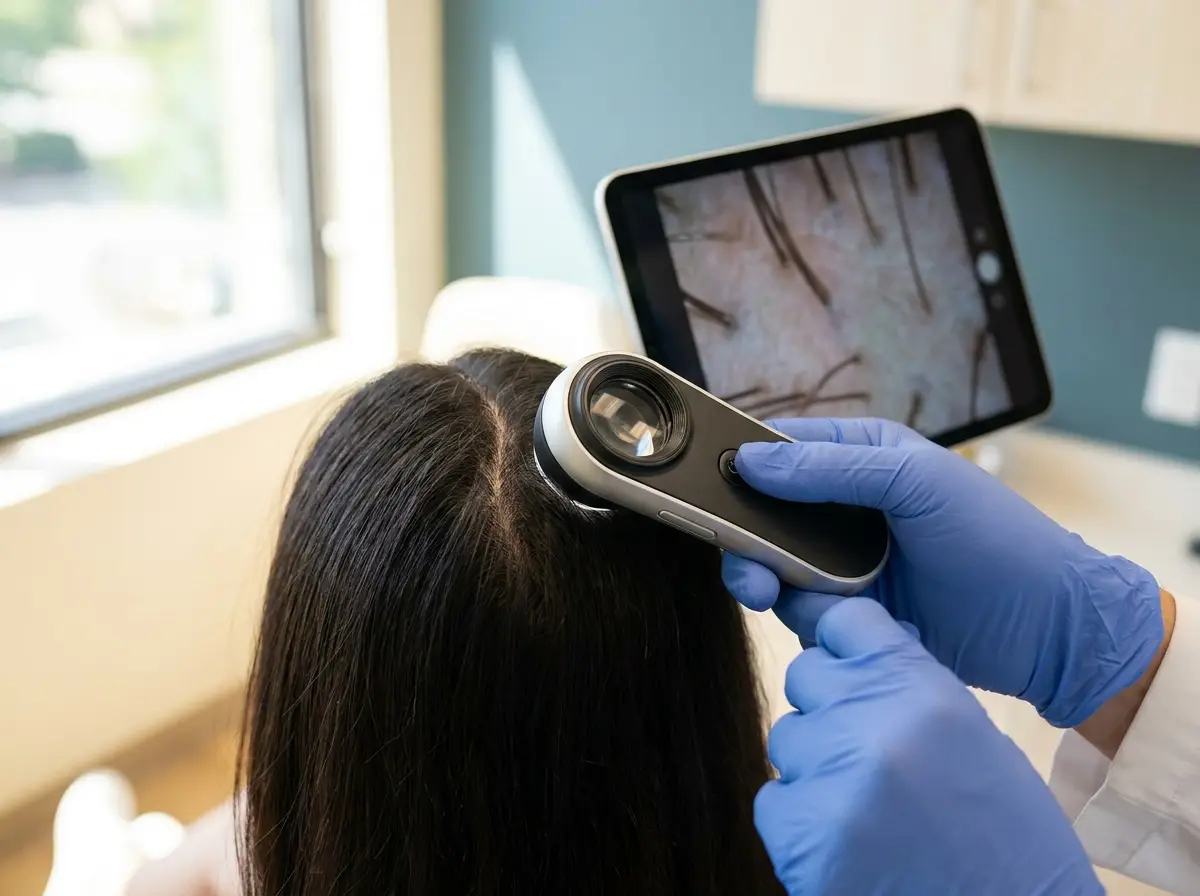
Because the wrong treatment can waste time or make things worse. A doctor will take a history, examine the patches closely, often using a magnifying scalp camera, and may suggest blood tests. In some cases they may refer you to a dermatologist or another specialist for further tests.
Alopecia areata is sometimes associated with other autoimmune conditions, such as thyroid disease, so a doctor may want to check your general health as well. Our free online Hair Recovery Analysis is an educational pre-assessment and cannot diagnose alopecia areata. If you have sudden patches, please speak to a doctor rather than relying on an online tool.
What might a doctor consider?
Treatment for alopecia areata is decided case by case, and in some mild cases a doctor may suggest simply monitoring, since patches can regrow on their own. Depending on the extent and your history, a doctor may consider:
- Prescription treatments applied to or injected into the patches, which are only used after a doctor's review.
- Referral to a dermatologist for more extensive or persistent loss, where other prescription options may be discussed.
- Checks for related conditions, such as thyroid function.
- Gentle scalp care and support while hair regrows.
Supportive treatments such as PRP therapy or low-level laser therapy are sometimes discussed, but evidence for their role in alopecia areata is more limited than for pattern hair loss. A doctor will explain whether they are reasonable in your case. We never recommend prescription medicines directly; they are only discussed after a doctor's review.
Is a hair transplant suitable for alopecia areata?
Usually not. While alopecia areata is active, the immune process that affects the original hairs can also affect transplanted grafts, so there is a real risk the transplanted hair could be lost too. Since hair often regrows on its own, surgery may also be unnecessary.
A hair transplant is designed mainly for pattern hair loss, where the donor hair at the back of the scalp tends to stay strong. For alopecia areata, surgery is generally avoided, and any exception would need a very careful specialist assessment over a long period of stability. We will tell you honestly if a transplant is not right for you.
Can someone have alopecia areata and pattern loss together?
Yes, it is possible. Someone may have a patch of alopecia areata alongside gradual pattern thinning, or shedding from stress at the same time. Each part needs to be understood separately.
This is another reason the in-person assessment matters. Once each cause is clear, a doctor can explain which concerns may be helped by treatment at our Dubai clinic and which need care elsewhere, such as with a dermatologist.
How can you look after your scalp in the meantime?
Patches can feel exposed, especially in Dubai's strong sun. Covering bare areas outdoors or using a scalp-safe sun protection product can help avoid burning. Gentle, fragrance-free products and avoiding tight styles may also be kinder to the scalp.
Alopecia areata can affect confidence and mood. Talking to someone you trust, or a professional, can help. Results of any treatment vary between individuals, and suitability is confirmed at consultation.
When should you seek help quickly?
Any new patch of hair loss is worth having checked, but some signs mean you should see a doctor sooner rather than later:
- Patches that are spreading quickly or joining together.
- Loss of eyebrows, eyelashes or body hair as well as scalp hair.
- A patch that is red, scaly, painful, pus-filled or scarred.
- Hair loss in a child.
- Other new symptoms, such as tiredness, weight change or feeling unwell.
Redness, scaling or scarring can point to conditions other than alopecia areata, some of which need prompt treatment to protect the follicles. If you notice any of these signs, contact a doctor, and for a child, their paediatrician or GP is a good first step. We can help arrange the next steps or point you to the right specialist.
How do you book an assessment?
You can book a consultation at our Dubai clinic, or start with a video teleconsultation to discuss your concerns. Treatment always needs an in-person assessment first. Message us on WhatsApp at +971 55 682 0206 or email info@hairbydash.ae, Sunday to Friday, 9AM to 7PM. Pricing is confirmed after your assessment.
Frequently asked questions
Will hair grow back with alopecia areata?
In many cases hair does regrow, sometimes without treatment, because the follicles are usually not destroyed. The course is hard to predict, though, and some people have repeated episodes or more widespread loss. A doctor can explain what your pattern suggests, and results vary between individuals.
Is alopecia areata caused by stress?
The exact cause is not fully understood. It is generally considered an autoimmune condition, possibly influenced by genetics. Some people notice episodes after stressful periods, but stress is not thought to be the only factor. It is not your fault, and it is not contagious.
Can I get a hair transplant for bald patches?
A transplant is usually not suitable for alopecia areata. While the condition is active, transplanted hair may be affected in the same way as the original hair, and patches often regrow on their own. A doctor will assess you honestly and explain safer options where they exist.
Does PRP work for alopecia areata?
PRP is sometimes discussed as a supportive option, but the evidence for alopecia areata is more limited than for pattern hair loss. It is not a replacement for a proper diagnosis and doctor-led care. Your doctor will explain whether it is reasonable in your case after examining you.
Should I see a dermatologist?
For patchy hair loss, a dermatologist's input can be very valuable, especially if loss is extensive, spreading or keeps returning. Our doctor may recommend a dermatology referral as part of your care. We will always be clear about what can be handled at our Dubai clinic and what needs specialist care elsewhere.
Educational information only, not a diagnosis. Suitability and results vary between individuals and are confirmed at consultation. Updated 17 November 2026.