
Why do women lose hair?
Women lose hair for many reasons, and often more than one at once. The most common patterns are gradual thinning on top of the head and sudden increased shedding all over. Hormones, genetics, stress, illness, pregnancy, diet and scalp health can all play a part.
Because the causes overlap, treatment that skips the assessment may miss the real driver. Our approach is to understand why it is happening before deciding what to do about it.
It also helps to know that some daily shedding is normal. What usually matters is a clear change from your own usual pattern, such as more hair in the shower drain, a thinner ponytail or a parting that looks wider than it did a year ago.
What is female pattern hair loss?
Female pattern hair loss usually shows as a widening parting and reduced volume on the top of the scalp, while the front hairline often stays in place. Doctors may describe it using the Ludwig scale, which grades how much density has been lost along the centre of the scalp.
It tends to develop slowly, and it can be linked to genetics and hormonal sensitivity. Many women first notice it as a ponytail that feels thinner, or scalp showing under bright bathroom lights. Early support may help preserve the hair you have, so it is worth acting when you first notice the change.
Is sudden shedding the same as thinning?
No. Sudden, heavy shedding is often telogen effluvium, where more hairs than usual move into the resting phase and fall out together. It commonly appears a few months after a trigger such as illness, high fever, major stress, surgery, crash dieting or a change in medication.
Telogen effluvium can be distressing, because hair seems to come out in handfuls. For many people it settles once the trigger is resolved, although it can last longer in some cases. A doctor can help confirm whether you are dealing with shedding, pattern thinning, or both.
What about postpartum hair loss?
Postpartum shedding is very common. During pregnancy, many women keep more hair in the growth phase. After birth, hormone levels shift and that extra hair can shed over the following months, often around the hairline and temples.
In many cases it improves on its own with time. If shedding continues well beyond the first year, or your hair does not seem to recover its usual density, an assessment can check for other factors. If you are breastfeeding, tell your doctor, since this affects which treatments may be suitable.
What might a doctor check?
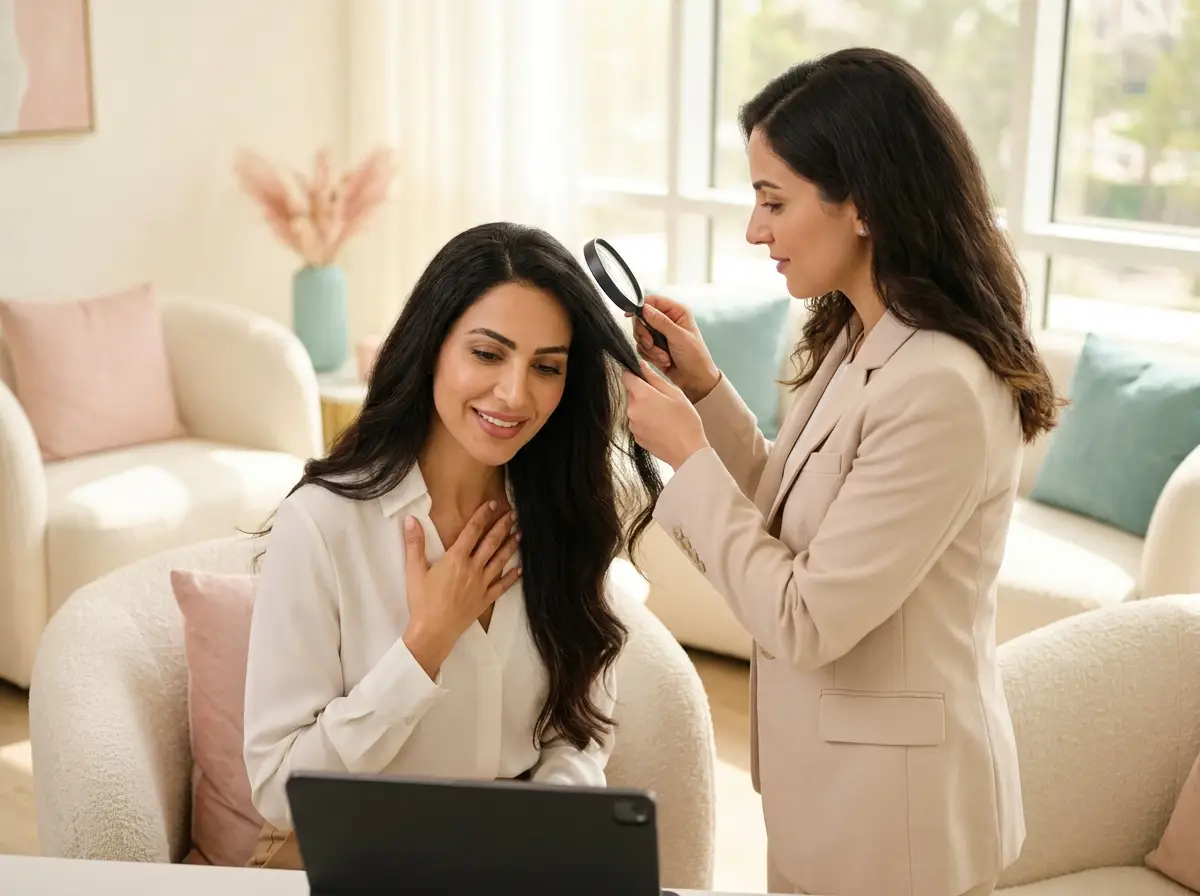
A doctor reviews your history, examines your scalp under magnification and may suggest blood tests to rule out common contributors. Things a doctor may look at include:
- Iron stores: low iron or ferritin can be linked to shedding.
- Thyroid function: both under and overactive thyroid can affect hair.
- PCOS and hormones: polycystic ovary syndrome can be associated with thinning on the scalp.
- Vitamin levels and diet: including recent weight loss or restrictive eating.
- Scalp health: irritation, flaking or inflammation.
If a medical cause is found, your doctor may suggest you work with your GP or a relevant specialist alongside any hair treatment. You can start with our free online Hair Recovery Analysis, an educational pre-assessment rather than a diagnosis.
Which gentle treatment options are available?
Once the cause is clearer, options are chosen to suit your scalp, schedule and comfort. Many women start with non-surgical care:
- PRP therapy: your own platelet-rich plasma, typically a 3 to 4 session induction series, with no significant downtime.
- Scalp mesotherapy: typically a 6-session series of nourishing scalp treatments.
- Hair Recovery Laser Cap: low-level laser therapy at home, at AED 4,499 or AED 3,999 in a bundle, delivered inside the UAE.
- Scalp microneedling and in-clinic laser therapy.
Prescription medicines are only discussed after a doctor's review, and some are not suitable during pregnancy or breastfeeding. Transplants are considered for women only in selected cases, after careful assessment.
How do the DASH plans work for women?
For early shedding or mild thinning, DASH CONTROL 90 focuses on stabilising and protecting your hair. For more visible thinning, DASH RECOVERY 180 combines in-clinic treatments with an at-home routine. Pricing is confirmed after your assessment.
Dubai life can add to the strain: strong sun on the parting, heat under tight styles, and frequent blow-drying or colouring. We include practical scalp and styling advice in every plan.
Which everyday habits can help your hair?
Small daily choices can reduce extra strain on hair that is already thinning or shedding. They will not treat the underlying cause, but they can help your hair look and feel healthier while treatment works.
- Loosen tight styles: high ponytails, buns and braids pulled tight can stress the hairline over time.
- Turn down the heat: use lower settings on dryers and straighteners and let hair dry partly on its own.
- Be gentle when wet: wet hair breaks more easily, so use a wide-tooth comb.
- Space out chemical treatments: frequent bleaching, colouring or straightening can weaken strands.
- Eat regularly and well: very restrictive diets can be linked to shedding.
If you wear a headscarf, choose breathable fabrics in the heat and avoid pinning it tightly in the same spot every day. Your doctor can tailor this advice to your hair type and routine.
What results can you expect?
Hair changes slowly, so progress is measured over months. Results vary between individuals, and suitability for any treatment is confirmed at consultation. We use scalp analysis and photos at follow-ups to see what is working.
To talk it through, book a consultation or message us on WhatsApp at +971 55 682 0206, Sunday to Friday, 9AM to 7PM. A video teleconsultation is available for a first discussion.
Frequently asked questions
Will my hair grow back after postpartum shedding?
For many women, postpartum shedding settles on its own over the following months as hormones rebalance. If heavy shedding continues for a long time, or your density does not seem to return, it is worth having an assessment to check for other contributors such as low iron or thyroid changes. Results vary between individuals.
Is PRP safe while breastfeeding?
PRP uses your own blood, but every treatment decision during breastfeeding should be made with a doctor who knows your full history. Please tell us if you are pregnant or breastfeeding. Your doctor will explain which options may be suitable now and which are better left until later.
Do I need blood tests before treatment?
Not always, but a doctor may suggest them if your history points to possible contributors such as iron, thyroid, vitamin levels or hormonal conditions like PCOS. Finding and addressing a cause can make hair treatment more effective. Your doctor will explain why any test is recommended.
Can stress cause hair loss in women?
Yes, major physical or emotional stress can trigger telogen effluvium, a type of increased shedding that often appears a few months after the stressful event. For many people it improves once the trigger passes. A doctor can confirm whether stress-related shedding, pattern thinning or both are involved.
Can I start with a video consultation?
Yes. A video teleconsultation can be used for an initial discussion about your concerns and history. Any treatment still needs an in-person assessment at our Dubai clinic first, where a doctor examines your scalp and confirms which options suit you.
Educational information only, not a diagnosis. Suitability and results vary between individuals and are confirmed at consultation. Updated 17 November 2026.