
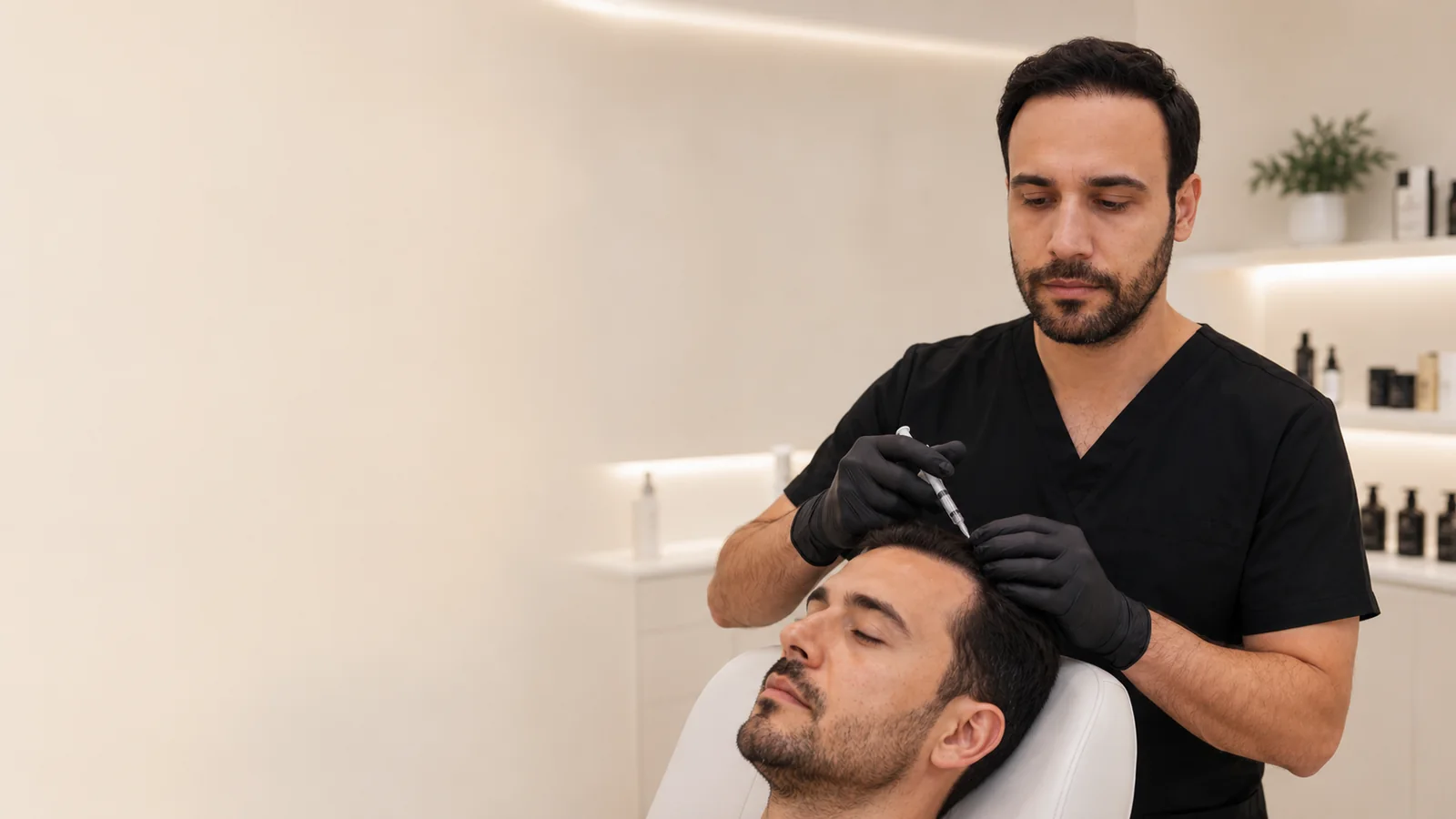
What is scalp microneedling?
Scalp microneedling is a clinical treatment that uses very fine needles to create controlled micro-channels in the skin of the scalp. The skin responds with a natural repair process, and the channels can help topical treatments reach the scalp more effectively.
At Hair By Dash it is performed at our Dubai clinic as one part of a structured plan led by Dr. Ammar Helali. It is not a cure for hair loss on its own, and results vary between individuals, and suitability is confirmed at consultation.
How can microneedling support hair recovery?
Microneedling may support hair recovery in two main ways: it stimulates a wound-healing response in the scalp, and it can improve how well certain topical products are absorbed.
- Scalp response: the controlled micro-injury can encourage local repair activity and blood flow around the follicles.
- Better absorption: the micro-channels may help doctor-selected topicals reach the scalp.
- Combination care: it is often used alongside PRP therapy or scalp mesotherapy rather than in isolation.
Research on microneedling for pattern hair loss is encouraging but still developing, which is why we treat it as a supporting tool inside a plan.
Who may be a candidate for scalp microneedling?
Microneedling may suit people with early to moderate thinning who still have active follicles in the area being treated. It is commonly considered for pattern thinning in men and women and for people who want to strengthen results from other treatments.
It may not be suitable if you have an active scalp infection, inflamed or broken skin, certain skin conditions, a tendency to keloid scarring or a bleeding disorder. Dr. Ammar Helali reviews your history and scalp in person before any treatment is booked.
Not sure where you stand? Start with the free online Hair Recovery Analysis to see your likely stage and pathway.
What happens during a session?
A session at our Dubai clinic is short and planned around comfort.
- The scalp is cleansed and the treatment area is reviewed.
- A topical numbing cream may be applied for comfort.
- The doctor passes a sterile microneedling device over the thinning areas at a depth chosen for your scalp.
- If it is part of your plan, PRP or a prescribed topical may be applied afterwards.
- You receive simple aftercare instructions before you leave.
Most people notice mild redness and tightness for a day or so. Normal daily activities can usually resume quickly.
Aftercare in the Dubai climate
Good aftercare matters more in Dubai because of heat, humidity and strong sun on the scalp.
- Avoid direct sun on the treated scalp for the first days, and wear a loose hat outdoors.
- Skip the gym, sauna, steam rooms and swimming pools for the period your doctor advises.
- Wash gently with the products recommended for you. Hard, desalinated water can feel drying, so a mild routine helps.
- Do not apply new products to the scalp unless the doctor has approved them.
Read more about water and scalp health in our hard water guide.
How microneedling fits the DASH plans
Microneedling is one tool inside the DASH recovery plans, chosen only if it suits your stage.
- DASH CONTROL 90 for early thinning, shedding and prevention.
- DASH RECOVERY 180 for visible thinning, combining clinic sessions with at-home care.
- Scalp preparation before a hair transplant, where the doctor feels it is appropriate.
The number of sessions and their spacing are set after assessment. Pricing is confirmed after your assessment.
Microneedling compared with other scalp treatments
Microneedling is a physical stimulus, while other treatments add something to the scalp. That is why they are often paired rather than compared.
| Treatment | How it works |
|---|---|
| Microneedling | Controlled micro-channels that trigger a repair response and may improve topical absorption |
| PRP | Your own platelet-rich plasma injected into the scalp |
| Mesotherapy | Micro-injections of a nourishing formulation |
| Laser therapy | Low-level red light with no needles or downtime |
The doctor chooses the mix for your scalp, and some people need only one of these.
Possible side effects and safety
Microneedling is generally well tolerated when performed in a clinic with sterile equipment. Common, short-lived effects include redness, tightness, mild swelling and pinpoint bleeding during treatment.
Less commonly, people can experience irritation, a reaction to a topical product or infection, which is why sterile technique and good aftercare matter. Tell the doctor about any medicines, blood thinners, skin conditions or previous reactions before your session, and contact us if you notice increasing pain, heat or swelling afterwards.
Booking scalp microneedling in Dubai
The first step is a consultation at our Dubai clinic, so the doctor can confirm whether microneedling is right for you.
You can book a consultation online, or message us on WhatsApp at +971 55 682 0206. We are open Sunday to Friday, 9AM to 7PM UAE time.
Frequently asked questions
Does scalp microneedling hurt?
Most people describe it as a prickling or scratching feeling. A topical numbing cream is usually applied before the session to keep it comfortable. Mild redness and tenderness afterwards are common and tend to settle within a day or two. Your doctor will explain what to expect for your scalp before you start.
How many microneedling sessions will I need?
It depends on your stage, your goals and what else is in your plan. Microneedling is usually given as a series spaced several weeks apart, often alongside PRP or topical care. The exact number and timing are set by the doctor after your in-person assessment, and results vary between individuals.
Can I combine microneedling with PRP?
Yes, combining the two is common. Microneedling may help PRP and topicals reach the scalp, and many plans use them together. Whether the combination suits you is decided at consultation, based on your scalp, your history and the type of hair loss the doctor finds.
Can I do microneedling at home instead?
Home dermarollers exist, but clinical microneedling uses sterile equipment, controlled depths and a doctor's judgement about your scalp. Home use carries a risk of irritation or infection if done incorrectly. Please discuss any home device with the doctor before using it, so it fits safely into your plan.
When might I notice a difference?
Hair grows slowly, so changes, if they happen, usually take several months to become visible. Your progress is tracked with scalp photos and follow-ups so you and the doctor can judge objectively. Results vary between individuals and depend on the cause and stage of your hair loss.
Educational information only, not a diagnosis. Suitability and results vary between individuals and are confirmed at consultation. Updated 17 November 2026.