
What is the difference between PRP and a hair transplant?
PRP is a non-surgical treatment that aims to support existing, weakening follicles. A hair transplant is a surgical day procedure that relocates healthy follicles from the back or sides of the scalp to areas where hair has been lost. One works on what is still there; the other rebuilds what is missing.
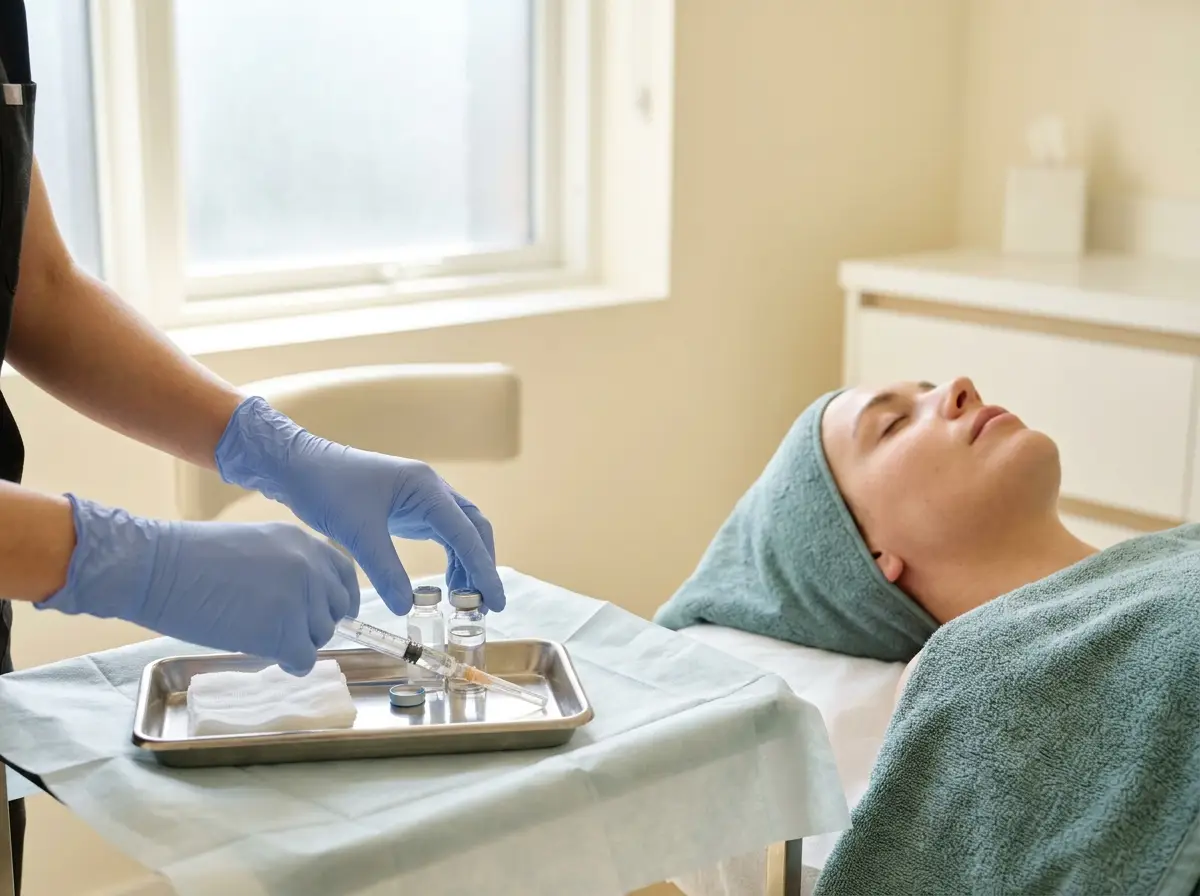
With PRP therapy, a small sample of your own blood is drawn, spun to concentrate the platelets, and the plasma is injected into the thinning areas of the scalp. Platelets carry growth factors, and for many people this may help miniaturising follicles produce thicker, healthier hair over time.
A hair transplant at our Dubai clinic uses FUE or DHI. Individual follicular units are taken from the donor area and placed into the recipient area, either into small channels (FUE) or directly with a Choi implanter pen (DHI). Transplanted follicles are usually taken from areas that are less affected by pattern hair loss.
PRP and hair transplant compared side by side
The simplest way to compare them is by what each one can and cannot do. The table below sets out the practical differences most people ask about.
| Factor | PRP | Hair transplant (FUE or DHI) |
|---|---|---|
| What it does | Supports weakening follicles that are still present | Moves healthy follicles into areas of loss |
| Type of treatment | Injections, non-surgical | Surgical day procedure under local anaesthesia |
| Typical course | An induction series of 3 to 4 sessions, then maintenance if advised | One procedure day, roughly 4 to 8 hours depending on graft count |
| Downtime | No significant downtime | A short recovery period with specific aftercare instructions |
| Can it restore bald areas? | No. It cannot create follicles where none remain | Yes, where donor hair allows |
| Protects surrounding native hair? | It can help support it | No. Native hair can keep thinning without a protection plan |
| Who decides suitability | A doctor at your in-person assessment | A doctor at your free candidacy assessment |
Results vary between individuals for both treatments, and suitability is always confirmed at consultation.
Who is PRP usually suited to?
PRP is usually considered for people in the earlier stages of hair loss, where follicles are thinning but still alive. If you notice more scalp showing through, a widening part, a slowly receding hairline or increased shedding, PRP may be part of a stabilising plan.
- Early to moderate thinning in men or women
- Diffuse thinning across the top of the scalp
- People who want a non-surgical option first
- People who are not, or not yet, transplant candidates
At Hair By Dash, PRP often sits inside DASH CONTROL 90 for early thinning and DASH RECOVERY 180 for visible thinning, alongside treatments such as mesotherapy, microneedling or laser therapy where a doctor feels they fit. PRP is not suitable for everyone, and certain blood or medical conditions may rule it out, which is why a doctor reviews your history first.
Who is a hair transplant usually suited to?
A transplant is usually considered when hair has been lost in a defined area, such as the hairline, temples or crown, and there is a healthy donor area to take grafts from. It is the option that can bring hair back to places where follicles are no longer working.
Good candidacy depends on several factors that only an examination can confirm: the quality and density of the donor area, how stable your hair loss is, your age and pattern, your overall health, and your expectations. Someone whose loss is still changing quickly may be advised to stabilise first, because a transplant does not stop future thinning of native hair.
Graft numbers are decided only by clinical assessment. The free candidacy assessment takes about 45 minutes and is the point where a doctor tells you honestly whether a transplant makes sense now, later, or not at all.
Can you combine PRP and a hair transplant?
Yes, and in many plans they are used together rather than as rivals. PRP can play a supporting role before and after surgery, while the transplant addresses the areas that have already been lost.
In DASH RECONSTRUCTION 365, the transplant is treated as a full 365-day system rather than a single day:
- Preparation: a recommended pre-operative scalp preparation programme of around 3 months, which may include PRP and a topical protocol, aims to get the scalp and surrounding hair into better condition.
- Transplant day: FUE or DHI, planned around your donor area and goals.
- Aftercare: post-operative care may include PRP, LED, topical care and specialist follow-ups to support healing and the native hair around the grafts.
The aim of combining them is to protect the hair you have while restoring what is missing. Whether PRP is advised before or after your procedure is a clinical decision made for you individually.
Why the stage of your hair loss matters most
The right choice depends far more on your stage than on personal preference. Choosing surgery too early can leave native hair thinning behind the grafts, while relying on PRP alone in advanced loss can lead to disappointment, because PRP cannot regrow hair where follicles have gone.
If you are unsure where you sit, our guide to hair loss stages explains the Norwood and Ludwig scales in plain language and how they map to each DASH plan. Clinical staging is always confirmed in person by a doctor.
Questions to ask before you decide
Before committing to either treatment, ask questions that reveal whether the plan is built around you. A good consultation should leave you clearer, not pressured.
- What stage is my hair loss, and is it stable?
- Is my donor area strong enough for a transplant now or in the future?
- What will protect my native hair over the long term?
- How many PRP sessions are planned, and how will progress be measured?
- What does aftercare involve, and who follows me up?
Prescription medicines are only discussed after a doctor's review, never as a default add-on.
How to start at Hair By Dash
The easiest first step is the free online Hair Recovery Analysis. It is an educational pre-assessment, not a diagnosis, and it helps point you towards the right conversation.
From there you can book an assessment at our Dubai clinic, where a doctor examines your scalp and recommends PRP, a transplant, a combination or another route. Pricing is confirmed after your assessment. You can also reach us on WhatsApp at +971 55 682 0206, Sunday to Friday, 9AM to 7PM UAE time.
Frequently asked questions
Is PRP an alternative to a hair transplant?
Not exactly. PRP aims to support follicles that are still present, while a transplant moves healthy follicles into areas where hair has been lost. For early thinning PRP may be enough to help stabilise things. For defined bald areas a transplant may be the only way to restore coverage. A doctor confirms which applies to you at consultation.
Can PRP regrow hair on a completely bald area?
No. PRP works on living follicles and cannot create new ones where follicles have stopped working. If an area has been bald for a long time, PRP is unlikely to bring it back. That is where a transplant may be considered, provided your donor area is suitable and a doctor confirms candidacy.
Should I have PRP before my hair transplant?
Many patients follow a recommended scalp preparation programme of around 3 months before surgery, which may include PRP and a topical protocol. The aim is to bring the scalp and surrounding hair into better condition. Whether PRP is right for your preparation depends on your health and scalp, so it is decided by the doctor.
Does a hair transplant stop further hair loss?
No. Transplanted follicles are taken from areas less affected by pattern loss, but the native hair around them can continue to thin. That is why Hair By Dash plans include aftercare and long-term preservation, which may include PRP, LED, topical care and follow-ups. Results vary between individuals.
How do I know which option suits me?
Start with the free online Hair Recovery Analysis, then book an in-person assessment at our Dubai clinic. A doctor examines your scalp, donor area and history, confirms your stage and explains whether PRP, a transplant or a combination fits. Suitability is always confirmed at consultation, and pricing is confirmed afterwards.
Educational information only, not a diagnosis. Suitability and results vary between individuals and are confirmed at consultation. Updated 17 November 2026.