
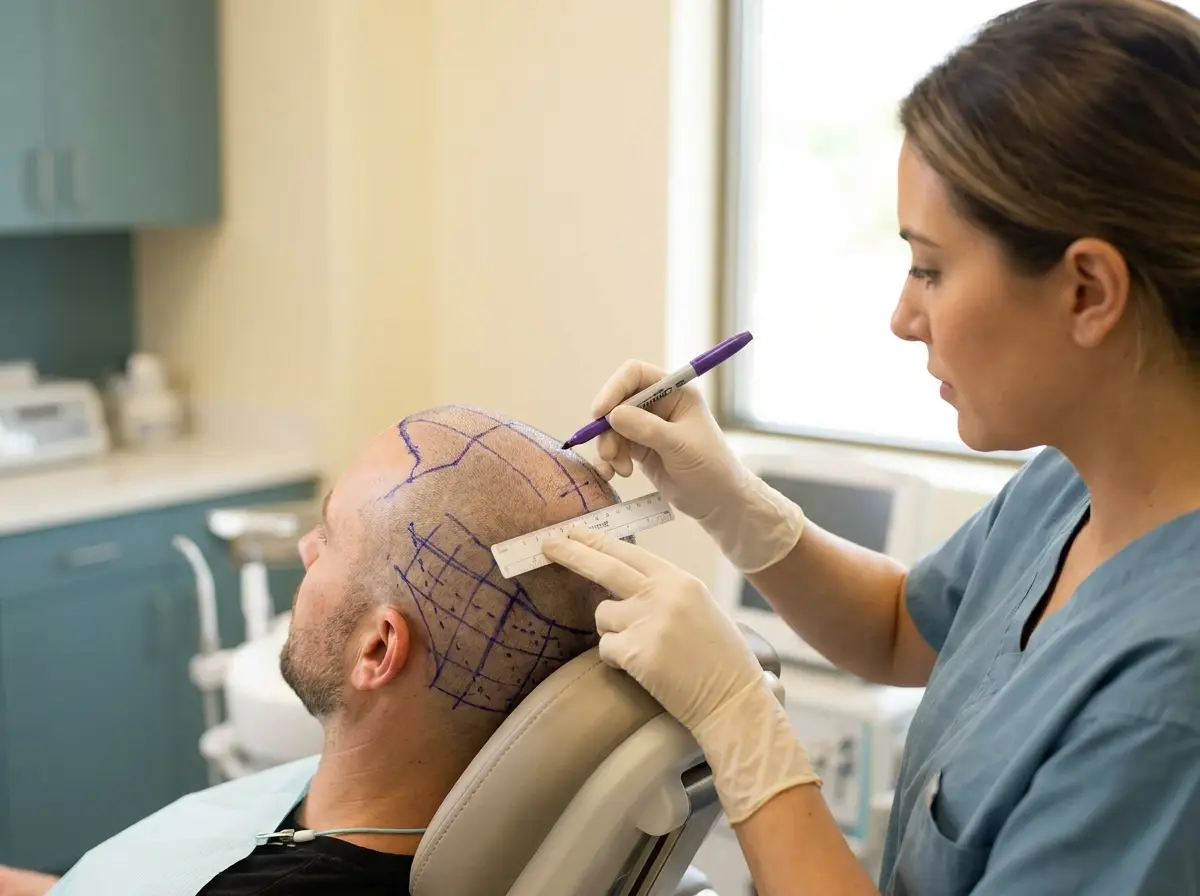
Is my hairline maturing or receding?
A maturing hairline is a normal change many men go through in their late teens and twenties. The hairline moves back slightly and evenly, often settling a little above the top forehead crease, and then tends to stay stable. A receding hairline keeps moving back over time, usually deeper at the temples, and often comes with finer, weaker hairs along the front.
Signs that suggest receding rather than maturing include:
- Temples that keep deepening year after year.
- Thin, wispy hairs along the hairline that look different from the rest.
- Thinning that also appears on top or at the crown.
- A family history of pattern hair loss.
Photos taken over time help a lot. A doctor can also check the hairline under magnification to look for miniaturised hairs.
Why do the temples go first?
In male pattern hair loss, follicles at the temples and front hairline are often more sensitive to androgens such as DHT. That sensitivity can cause them to shrink gradually, so the temples are a common first sign of androgenetic alopecia.
Women can also notice temple thinning, sometimes after pregnancy or from tight hairstyles that pull on the edges. The cause matters, because traction-related loss and pattern loss are treated differently. Our pages on hair loss treatment for men and hair loss treatment for women explain the wider picture.
Hairstyle can play a part too. Regularly wearing very tight styles, such as tight braids, buns or a firmly pulled-back look, may put repeated strain on the temples and front hairline. If this is the cause, loosening styles early may help, so it is worth mentioning your usual styling habits at your assessment.
When are PRP and medical treatment the right choice?
Non-surgical treatment usually makes sense when the hairline is still receding but weakened hairs remain. The aim is to protect and strengthen what is there, and to slow further change.
- PRP therapy: own-blood platelet-rich plasma injected into the scalp, typically a 3 to 4 session induction series with no significant downtime.
- Scalp microneedling and low-level laser therapy to support the scalp.
- Prescription medicines, which are only ever discussed after a doctor's review of your health and goals.
For early recession, DASH CONTROL 90 focuses on stabilising the hairline. Many people use this stage to decide calmly whether they will ever want surgery.
When does DHI hairline design make sense?
A hairline transplant may be considered when the temples or front have lost hair that non-surgical care is unlikely to bring back, the pattern has become more predictable, and the donor area at the back and sides is strong enough.
DHI uses the Choi implanter pen to place grafts directly, giving the surgeon fine control over angle and direction. That control is useful at the hairline, where hairs need to sit at a low angle and follow a natural, slightly irregular line. FUE is also an option, and your doctor will explain which suits you. Both are day procedures under local anaesthesia, roughly 4 to 8 hours depending on graft count, and graft numbers are decided only by clinical assessment.
What makes a hairline look natural?
A natural hairline is not a straight line. It usually has a soft, slightly uneven front edge, single hairs at the very front, and a shape that suits your face and age.
Good design also plans for the future. A hairline placed too low may look fine at first but can look out of place if hair behind it continues to thin. Your doctor designs a line that should still suit you years from now, and uses donor hair carefully so some remains for later needs. Read more on our hair transplant page.
Your doctor will show you the proposed line before any procedure, so you can discuss the shape and height together.
How is a hairline treatment planned at DASH?
Every plan starts with an assessment. You can begin with our free online Hair Recovery Analysis, an educational pre-assessment, not a diagnosis. Clinical staging is then confirmed in person at our Dubai clinic.
If a transplant is an option, the free candidacy assessment takes about 45 minutes. We usually recommend around 3 months of scalp preparation before surgery, which may include PRP and a topical protocol, and aftercare that may include PRP, LED and specialist follow-ups. For advanced loss this is part of DASH RECONSTRUCTION 365. Pricing is confirmed after your assessment.
Should you treat early or wait and watch?
If you are unsure whether your hairline is maturing or receding, a period of careful monitoring can be sensible, as long as you track it properly. Take clear photos of your hairline and temples every few months, in the same light and with hair pulled back.
Acting earlier tends to make more sense when the temples are clearly deepening, the front hairs look finer, or there is strong family history. Non-surgical care works on hairs that are still there, so waiting too long can narrow the options. On the other hand, rushing into surgery before the pattern is clear can lead to a hairline that does not suit you later. A doctor can help you find the right balance, and our free analysis gives you a structured starting point. Results vary between individuals.
Does the Dubai climate matter for the hairline?
Yes, a little. The hairline is exposed to strong sun all year, and sweat, helmets and caps can irritate the area. After a transplant, protecting the hairline from direct sun and heavy sweating during early healing is especially important, and your aftercare plan will cover how to do this.
Results vary between individuals, and suitability for any treatment is confirmed at consultation. To start, book a consultation or message us on WhatsApp at +971 55 682 0206.
Frequently asked questions
Is a maturing hairline a sign of balding?
Not always. Many men see their hairline move back slightly and evenly in their late teens or twenties, then settle. This is a normal maturing change. If the temples keep deepening or the front hairs look finer, it may be early pattern loss. A doctor can check under magnification and confirm.
Can PRP bring back a receding hairline?
PRP aims to support follicles that are still present, so it may help strengthen weakened hairs and slow further recession for some people. It is less likely to restore areas that have been bare for a long time. Results vary between individuals, and suitability is confirmed at consultation.
What age is right for a hairline transplant?
There is no single right age. Doctors are often cautious with very young patients, because the pattern of loss may not be clear yet. What matters most is how predictable your loss has become, the strength of your donor area, and realistic expectations, all confirmed at an in-person assessment.
Is DHI better than FUE for the hairline?
Both can work well at the hairline. DHI with the Choi implanter pen gives fine control over angle and direction when placing grafts, which can help with a natural front edge. FUE is also widely used. Your doctor will suggest the method that suits your hair type and goals.
Can women treat thinning temples?
Yes. Women may notice temple thinning after pregnancy, from tight hairstyles, or with pattern thinning. The cause guides the treatment, which may include PRP, scalp care or changes to styling habits. A doctor will assess the area first and suggest gentle options where suitable.
Educational information only, not a diagnosis. Suitability and results vary between individuals and are confirmed at consultation. Updated 17 November 2026.