
What happens month by month
The year is split into preparation, procedure where suitable, and recovery with preservation. Timing differs for each person, so this is a general outline.
- Months 0 to 3: donor assessment, baseline photos and scalp checks, and stabilisation. Pre-operative scalp preparation may include PRP and a topical protocol.
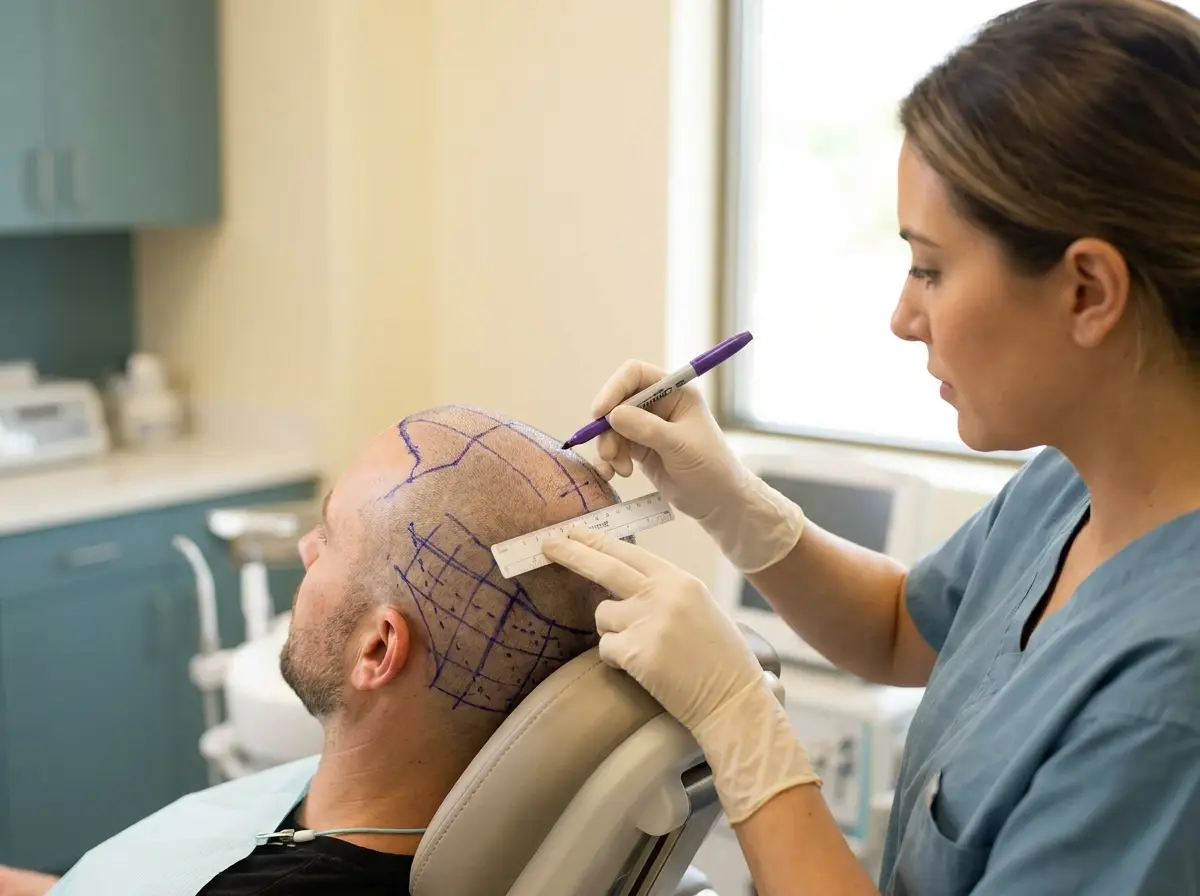
- Months 3 to 6: candidacy confirmed, hairline and graft planning, and the hair transplant if suitable. The procedure itself is a day procedure under local anaesthesia.
- Months 6 to 9: healing and the quiet phase after early shedding of transplanted hairs. Aftercare may include PRP, LED, topical care and specialist follow-ups.
- Months 9 to 12: growth is reviewed against your baseline, and a long-term preservation plan is agreed.
Transplanted hair often keeps changing beyond the first year. Results vary between individuals, and suitability is confirmed at consultation.
Who DASH RECONSTRUCTION 365 is for, and who it is not for
It is for people with advanced loss who may be transplant candidates, and for those who have already had a transplant and want structured aftercare and preservation.
- A good fit: advanced thinning or bald areas with an adequate donor area and realistic goals.
- Probably not the right plan: early or moderate thinning that may respond to non-surgical care, such as DASH RECOVERY 180.
- Not suitable for surgery: a weak donor area, unstable or rapidly progressing loss, or medical reasons the doctor identifies. In these cases, the plan focuses on stabilisation instead.
How progress is tracked
Progress is tracked against a documented baseline, using standardised photos and scalp checks at each phase. Native hair is tracked too, because protecting it matters as much as the transplanted area.
Patients travelling from outside Dubai can often combine in-person visits at key points with video follow-ups in between. See GCC patients for planning.
Frequently asked questions
Why does the plan last 365 days if the transplant takes one day?
Because the outcome depends on more than the procedure. Preparation may help the scalp and stabilise ongoing loss, and aftercare supports healing and protects native hair. Growth after a transplant also takes many months, so a year allows the result to be reviewed properly.
What if I am not a transplant candidate?
Then surgery is not offered. The plan shifts to stabilising hair loss with non-surgical care, and the doctor explains why. A transplant is recommended only where clinically appropriate, after assessment.
Can I join after having a transplant elsewhere?
You can ask for an assessment. The doctor will review your scalp, donor area and history, then advise on aftercare and preservation options. Bring any details you have about the earlier procedure.
How much does DASH RECONSTRUCTION 365 cost?
Pricing is confirmed after your assessment, because it depends on graft numbers, technique and the care needed before and after surgery. The candidacy assessment is free and there is no obligation.